
Fairfax County Bankruptcy Records
Fairfax County bankruptcy records are filed and managed through the Eastern District of Virginia, Alexandria Division. If you need to search for a bankruptcy case tied to Fairfax County, the federal court system is where you look. Cases include Chapter 7 liquidations, Chapter 13 repayment plans, and Chapter 11 reorganizations. You can search by name or case number using the PACER system online. This page covers where the records are kept, how to find them, what they include, and what local resources exist for residents dealing with bankruptcy filings.
Fairfax County Overview
Eastern District Bankruptcy Court - Alexandria Division
Fairfax County falls under the Eastern District of Virginia for federal bankruptcy cases. The Alexandria Division handles all filings from Fairfax County. You do not file bankruptcy at the county courthouse. You file with the federal court. The Eastern District court is located at 200 South Washington Street in Alexandria. The court phone number is (703) 258-1200.
The Eastern District of Virginia is one of the busiest federal courts in the country. It handles a high volume of consumer and business bankruptcy cases from Northern Virginia. The Alexandria Division takes cases from Fairfax County, Loudoun County, Prince William County, Arlington County, and several nearby independent cities. If you need to file or search for a case from Fairfax County, the Alexandria Division is the right court to contact.
| Court | U.S. Bankruptcy Court - Eastern District of Virginia |
|---|---|
| Division | Alexandria Division |
| Address | 200 South Washington Street, Alexandria, VA 22314 |
| Phone | (703) 258-1200 |
| Website | vaeb.uscourts.gov |
The court's website at vaeb.uscourts.gov has local rules, forms, filing instructions, and a case search tool. You can also reach the court through PACER for full docket access. Bankruptcy forms accepted by this court are listed at vaeb.uscourts.gov/bankruptcy-forms.
How to Search Fairfax County Bankruptcy Records
The main tool for searching federal bankruptcy records is PACER, which stands for Public Access to Court Electronic Records. PACER gives you access to case filings, dockets, and documents from all federal courts in the country. You need a free account to use it. Searches cost $0.10 per page, but fees under $30 per quarter are waived. Register at pacer.uscourts.gov.
To search for a Fairfax County bankruptcy case in PACER, select the Eastern District of Virginia from the court list. You can then search by debtor name, attorney name, trustee name, or case number. The results show all case types, filing dates, and current status. Full dockets let you see every document filed in the case. This is useful if you are a creditor, doing a background check on a business, or researching a property title.
The Virginia Courts Case Information system at eapps.courts.state.va.us covers state court cases, not federal bankruptcy cases. If you want state civil or criminal records from Fairfax County, that is the right place. For bankruptcy, you need PACER or the federal court directly.
You can also call the Voice Case Information System (VCIS) toll-free at 1-866-222-8029. For Eastern District cases, press 863 after the prompt. VCIS gives you basic case information over the phone at no charge. It works well if you just need a case number or want to confirm whether someone has an active bankruptcy.
The Fairfax County Circuit Court Clerk handles state-level court records. The office is at 4110 Chain Bridge Road in Fairfax and can be reached at (703) 246-2770. Visit fairfaxcounty.gov/courts/circuit-clerk for information on civil and criminal court records, land records, and related filings. State court records are separate from federal bankruptcy records.
The Virginia Judicial System page for Fairfax County provides direct links to case lookup tools and circuit court information. Fairfax County has the largest trial court in Virginia by caseload, and its online systems are among the most developed in the state.
Fairfax County Court Resources
The Fairfax County Circuit Court Clerk's office maintains comprehensive online access tools for land records, civil cases, and related filings.
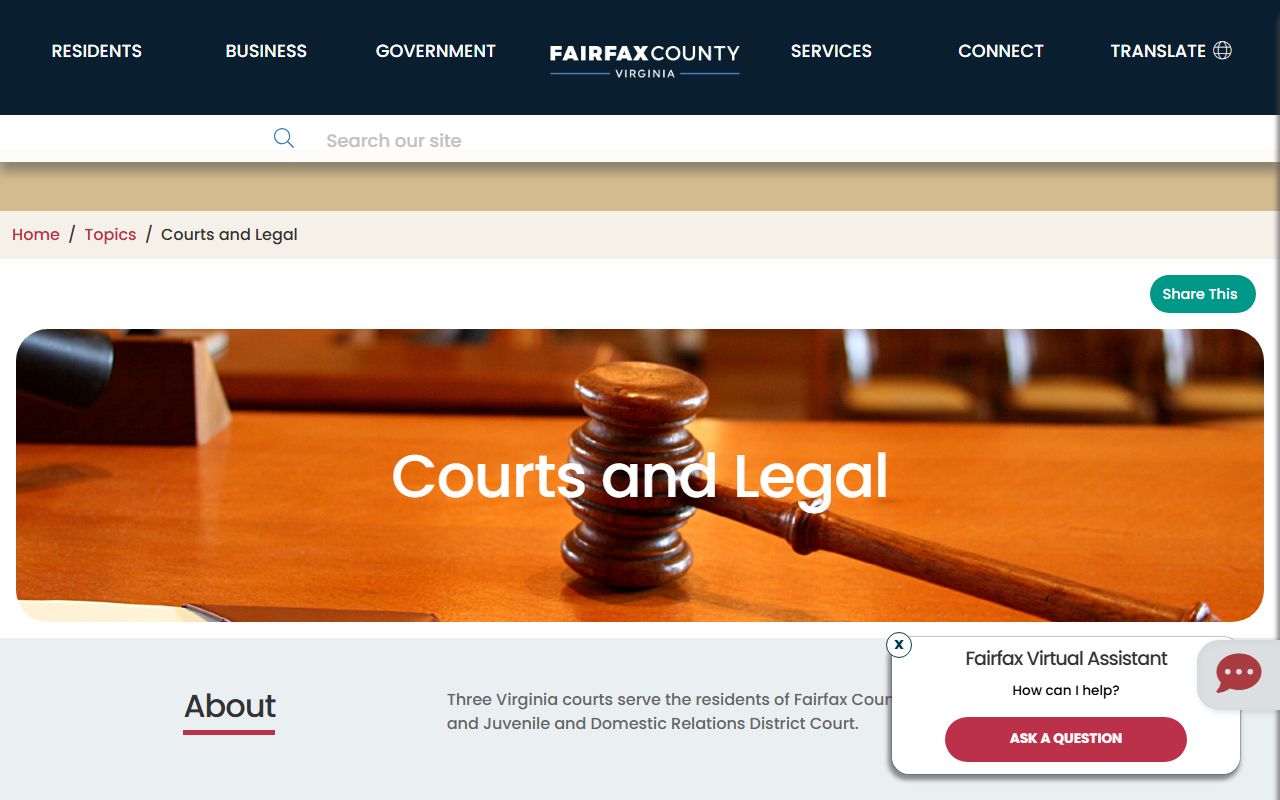
The Circuit Court Clerk handles land records, probate filings, and civil cases at the county level, separate from federal bankruptcy proceedings.
The Fairfax County government website provides information about county services and resources available to residents.
The county site links to courts, legal aid, financial services, and other resources that may be helpful when dealing with a bankruptcy matter.
The Virginia Judicial System page for Fairfax County provides the official circuit court directory and case access links.
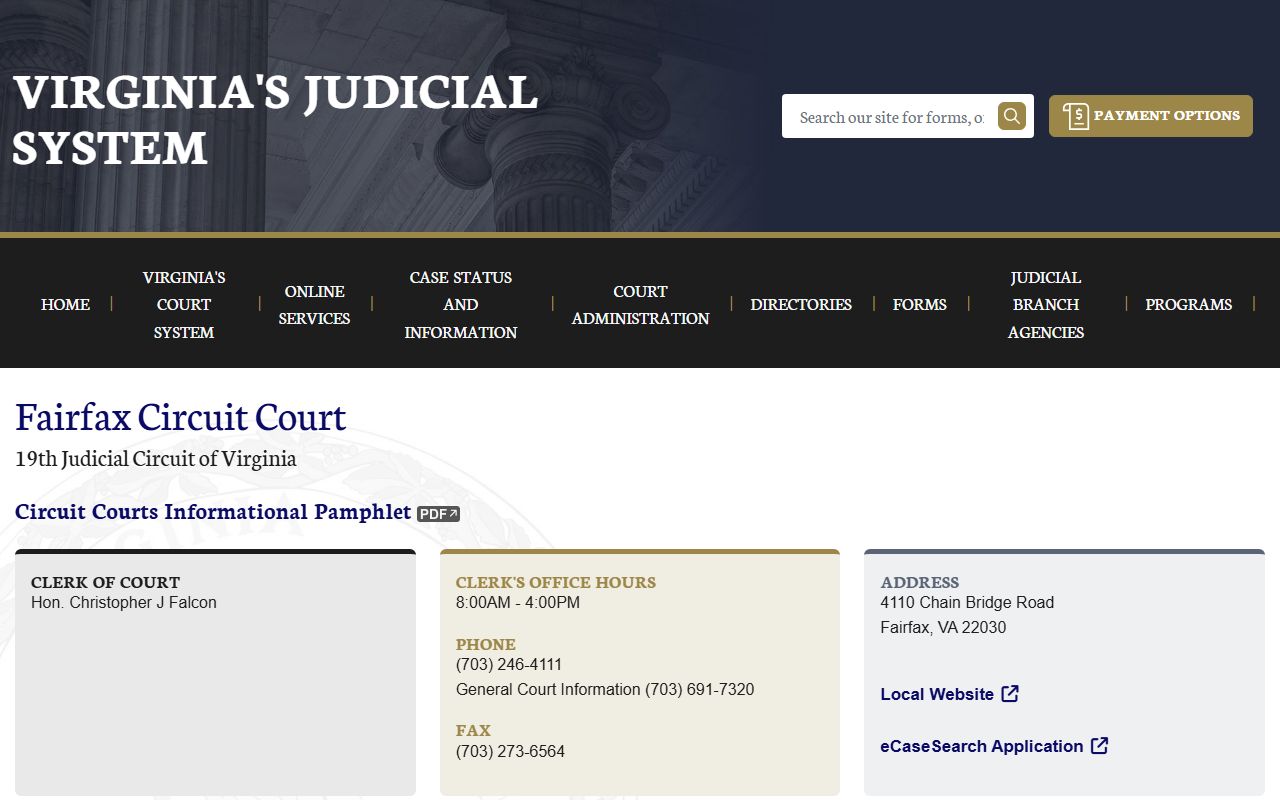
This state resource connects you to the Fairfax County Circuit Court, its clerks, and the tools for searching state-level case records online.
Types of Bankruptcy Cases in Fairfax County
Most people who file bankruptcy in Fairfax County choose Chapter 7 or Chapter 13. Chapter 7 is a liquidation bankruptcy. It wipes out most unsecured debts like credit cards and medical bills. You do not have to repay them. The filing fee is $338. Most Chapter 7 cases close in about four months. You must pass a means test to qualify based on your income level.
Chapter 13 is a repayment plan bankruptcy. Instead of wiping out debts right away, you pay back some or all of what you owe over three to five years. The filing fee is $313. Chapter 13 is useful if you want to keep a home and catch up on mortgage arrears, or if you have income that disqualifies you from Chapter 7. The plan must be approved by the bankruptcy court judge.
Chapter 11 is primarily for businesses, though individuals with very large debts sometimes use it. It allows the debtor to reorganize finances and continue operating while paying creditors under a court-approved plan. Chapter 11 cases are more complex and expensive to pursue. Fairfax County has a significant business community, so Chapter 11 filings are not uncommon in the Alexandria Division.
Note: Regardless of which chapter you file under, the case will appear in the PACER database and in public court records.
What Fairfax County Bankruptcy Records Include
A bankruptcy case file contains a lot of documents. The petition is the first filing. It lists the debtor's name, address, and the chapter being filed. The schedules that come with it detail all assets, all debts, income, and expenses. These are public records. Anyone can view them through PACER once they have an account.
The creditor matrix is a list of everyone the debtor owes money to. The statement of financial affairs covers recent financial transactions, lawsuits, and payments made before filing. The means test calculation shows whether the debtor qualifies for Chapter 7 based on income. Meeting of creditors notices, called 341 meeting notices, tell creditors when and where to appear. All of these documents are part of the public record.
What you will find in a standard bankruptcy case file:
- Voluntary petition with debtor name and address
- Schedule A/B listing real and personal property
- Schedule D, E/F listing secured and unsecured creditors
- Schedule I and J showing income and expenses
- Statement of financial affairs
- Means test calculation for Chapter 7 cases
- Discharge order if the case was completed
Some information may be restricted. Social Security numbers are redacted in public filings. Minor children's names are also limited in what appears in public records. The court clerk can tell you what is accessible if you have a question about a specific document.
Fairfax County Land Records and Bankruptcy
When someone files bankruptcy in Fairfax County, it can affect property records. A bankruptcy filing creates an automatic stay that stops foreclosure and other collection actions. This shows up as a lien or notice in county land records. The Fairfax County land records system tracks these filings and any related deeds, releases, or transfers that happen during or after the case.
Fairfax County offers Secure Remote Access (SRA) for land records. This lets you search deeds, deeds of trust, and other recorded documents from a computer. The land records site is at fairfaxcounty.gov/land-records. If you are doing a title search on a property with a prior bankruptcy, check both PACER for the federal case and the land records system for any recorded documents.
The county also offers the VADeed Alert service to protect property owners from deed fraud. If a deed is recorded on your property without your knowledge, you receive an alert. This is a free service through the Fairfax County Circuit Court Clerk's office. Contact the clerk at (703) 246-2770 to enroll.
Legal Help for Bankruptcy in Fairfax County
If you need help with a bankruptcy case in Fairfax County, several organizations offer free or low-cost legal assistance. Virginia Legal Aid at valegalaid.org serves low-income residents throughout Northern Virginia. They can help you understand whether bankruptcy is right for your situation and assist with forms and filings. Call or check their website for income guidelines and service areas.
The Eastern District of Virginia bankruptcy court does not require an attorney to file, but most people benefit from legal representation, especially in Chapter 13 cases. The court maintains a list of approved credit counseling agencies on its website. Federal law requires you to complete a credit counseling course before filing and a debtor education course before receiving a discharge. Both must come from approved providers.
The National Archives at archives.gov/research/court-records holds older closed bankruptcy cases that have been transferred out of the federal court system. If you are looking for a case from many years ago, you may need to request records from the National Archives rather than PACER.
Note: Fairfax County has significant online resources for court records due to its high case volume, making it easier to access bankruptcy information remotely than in many smaller Virginia counties.
Nearby Counties
These counties are near Fairfax County. All of them are also in the Eastern District of Virginia for bankruptcy purposes.